Quanzhou 泉州
Quanzhou, following the traces of a trading city
Quanzhou’s appeal lies in the close conversation between religious buildings, old streets and everyday food. Instead of racing through a long heritage list, connect a few places with time to read and walk. An extra day allows the story to extend towards bridges, coastal settlements or the tea country beyond.
Original planning guide · Not a first-hand travel account
Resized to at most 800 pixels and converted to WebP. Display-cropped to fit the page.
Start with the old-city core
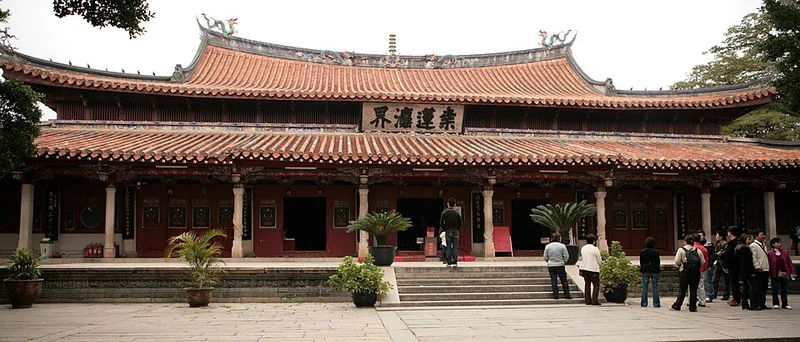
Kaiyuan Temple gives the visit a strong architectural anchor, with details worth examining slowly rather than photographing only from the main axis. Continue into nearby streets for a meal and a look at everyday shops. Active religious sites are not simply outdoor museums; observe signs and leave space for worshippers. Keeping this first loop short makes it easier to linger when a building or conversation catches your attention.
Read the maritime connections
Quanzhou’s historic role in long-distance trade becomes clearer when a museum visit is paired with selected religious or commercial landmarks. Focus on a few connections: materials, beliefs, routes and the people who moved between them. Avoid assuming every surviving structure belongs to the same period. A little interpretation can turn a sequence of attractive facades into a more meaningful picture of the city’s changing relationships.
Choose a deliberate trip beyond the centre
Luoyang Bridge provides a different scale of heritage and a chance to look at how a crossing relates to its estuary setting. Give the journey proper space rather than squeezing it between central stops. Tea-focused travellers might instead arrange a separate Anxi outing, with transport and a tasting agreed in advance. The coast and tea-growing area are alternatives, not an easy pair of additions to one afternoon.
At the table.
Mianxianhu, oyster omelette and ginger duck show different sides of southern Fujian cooking. Ask about shellfish and meat stocks in noodle dishes, and make space for an unhurried Tieguanyin tasting if tea interests you.
Before you go.
Save place names in Chinese, especially for sites outside the old centre, and check the precise railway station used by your train. Many attractive lanes remain residential. Ask before photographing people, keep doorways open, and confirm current access before travelling to an outlying heritage site.
This is a planning guide, not a live availability report. Confirm opening arrangements, reservations, transport, access rules and dietary needs before travelling.
Places & flavors to explore.
Regional excursions may need a separate travel day.
Turn an idea into your journey.
Share your interests and dates. A trip designer can shape the details around you.