Yanji 延吉
Yanji through breakfast stalls and a mountain skyline
Yanji is an inviting place to explore Korean Chinese food traditions and the everyday life of Yanbian. Give markets, museum context and neighbourhood meals more attention than a sequence of photo spots. A nearby hill outing adds breathing space, while larger mountain destinations belong in a separate part of the journey.
Original planning guide · Not a first-hand travel account
Resized to at most 800 pixels and converted to WebP. Display-cropped to fit the page.
Let breakfast open the city
Begin with a market or local breakfast street, choosing a few small portions instead of attempting every popular snack in one sitting. Look at breads, rice preparations and pickled side dishes, and ask before photographing stallholders closely. Markets remain working places, so avoid blocking sales while browsing. A seated coffee or tea afterwards gives time to decide which flavours deserve another meal later.
Add context beyond the food
A visit to the Yanbian museum can introduce the region’s communities, language and history before an afternoon neighbourhood walk. Korean and Chinese signage reflects a living local setting, not an attraction created solely for visitors. Treat cultural dress experiences as optional commercial activities rather than a substitute for understanding. Follow museum access rules and allow space for residents using the same streets and public places.
Choose a modest climb or a longer extension
Mao’er Mountain offers a nearby change of pace for travellers comfortable with an uphill walk, provided conditions and access are suitable. Plan it separately from a long meal crawl. Changbai Mountain is a much larger extension with substantial transport requirements, not an automatic afternoon excursion from Yanji. Choosing a shorter local outing leaves time for another neighbourhood dinner and an unhurried final morning.
At the table.
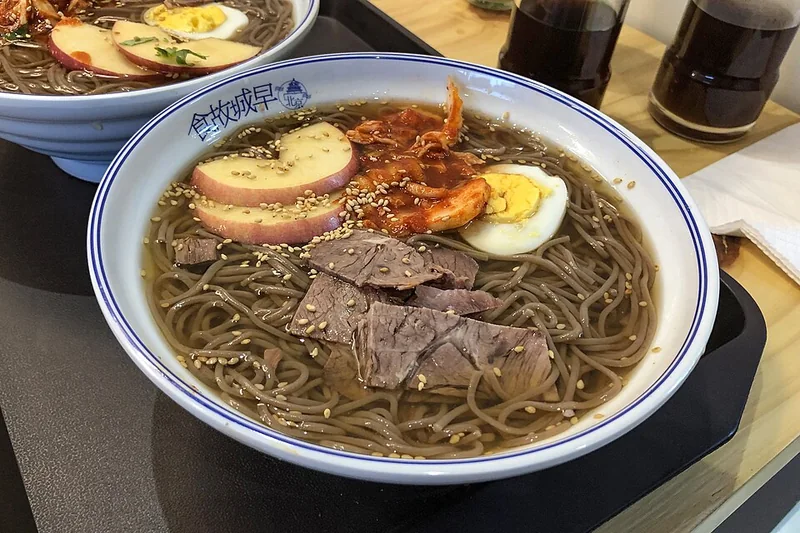
Compare cold noodles, bibimbap and pounded rice cakes across separate meals. Cold-noodle broth may be sweet, sour and meat-based; toppings vary. Ask about chilli, sesame, egg and shellfish seasonings rather than relying only on menu pictures.
Before you go.
Use the complete station name when arranging transfers and keep key destination names in Chinese. Check museum and mountain access before departure. Explain allergies clearly: broths, fermented sauces and side dishes can contain seafood, sesame or meat even when the main ingredient appears suitable.
This is a planning guide, not a live availability report. Confirm opening arrangements, reservations, transport, access rules and dietary needs before travelling.
Places & flavors to explore.
Regional excursions may need a separate travel day.
Turn an idea into your journey.
Share your interests and dates. A trip designer can shape the details around you.